
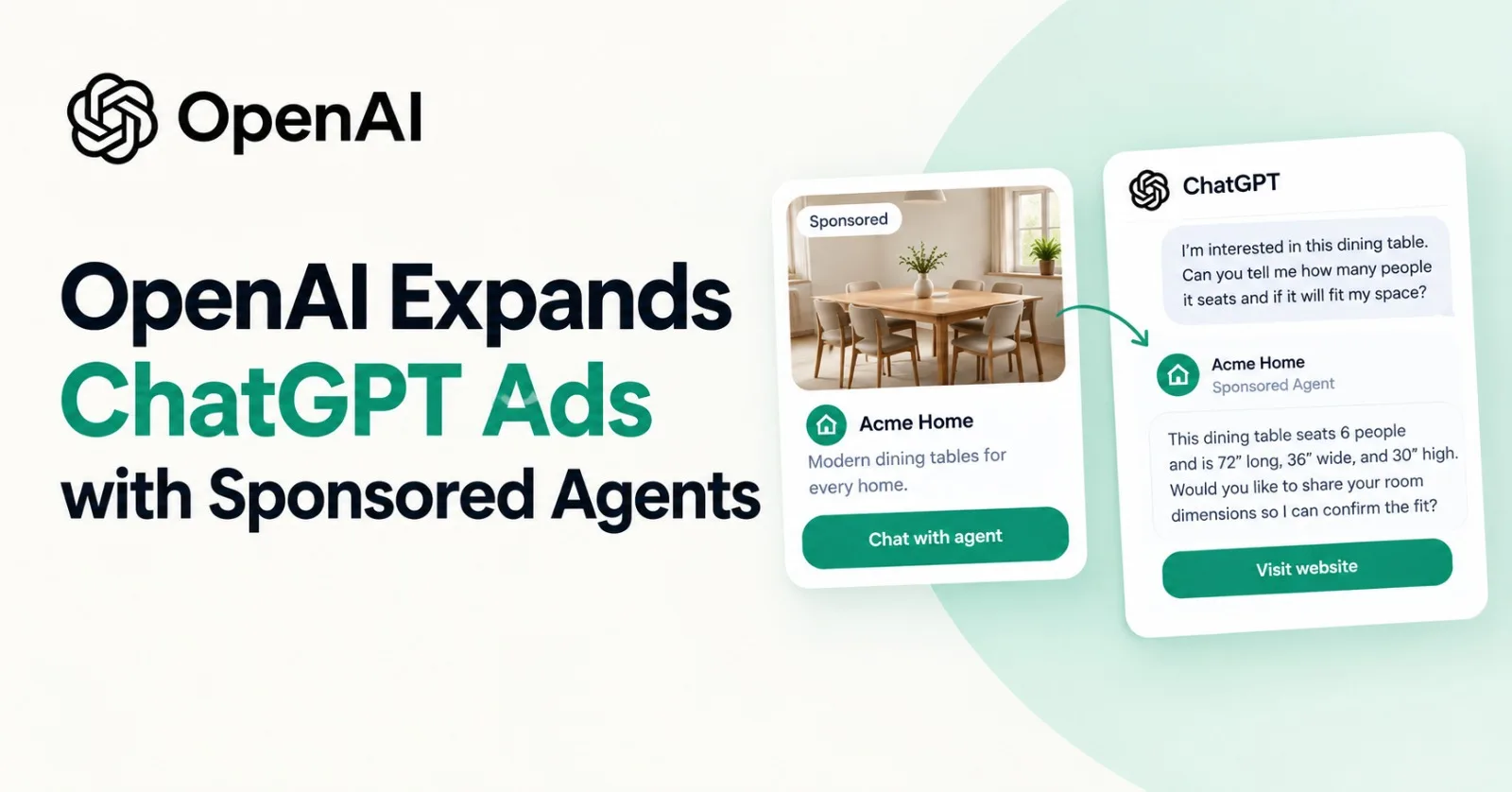
OpenAI is pushing further into advertising with a new feature called Sponsored Agents, letting ChatGPT users hold a full conversation with a brand's AI agent after clicking an ad, rather than just being sent to a landing page.
Key takeaways
What's new: Sponsored Agents let users open a labeled conversation with a business's own AI bot right after seeing an ad in ChatGPT.
Still a test: The feature is limited to select US advertisers for now, alongside new HubSpot and Shopify integrations.
The money behind it: OpenAI could burn through $115 billion in cash by 2030, which helps explain the push into ad revenue.
Not without critics: A researcher's resignation and a pointed Anthropic Super Bowl ad have kept scrutiny on how personalized — and how separate from ChatGPT's own answers — these ads really are.
What are Sponsored Agents?
OpenAI describes Sponsored Agents as a way for people to start a conversation with a business-sponsored agent right after clicking an ad in ChatGPT. Say someone sees an ad for a dining table and wants to know how many people it seats, or whether it'll actually fit their space — they can click a clearly marked button and start chatting with that advertiser's own bot.
OpenAI has stressed that a conversation with a Sponsored Agent stays separate from ChatGPT's own answers and from the original conversation that led the user there. The goal is to turn what used to be a static ad card into something closer to an interactive brand rep, without users mistaking it for ChatGPT's own response. People can explain what they need, ask follow-up questions, and click through to the business's website once they're ready to move forward.
The feature is currently being tested with a select group of advertisers in the United States, as TechRepublic reported.
More than just chat
Sponsored Agents didn't launch alone. Alongside it, OpenAI rolled out a set of changes that look less like new ad inventory and more like a full advertising ecosystem built inside ChatGPT. Advertisers can now generate campaigns from simple prompts instead of building them by hand, and businesses on HubSpot can connect a ChatGPT Ads account directly, building and tracking ads and following up on leads without leaving the platform.
Shopify merchants in the US get a similar setup through a dedicated app that connects their product catalog and measurement tools, with an international rollout planned for later in the month. OpenAI is also letting advertisers opt into automatic text customization, which adapts existing headlines and descriptions to fit a conversation's context and can translate copy into a user's preferred language.
Why now? The money behind the move
Ads first landed inside ChatGPT in February 2026, and the financial pressure behind this latest expansion is easy to see. OpenAI reached a $20 billion annualized revenue run rate by late 2025, but its operating costs dwarf that income: the company could burn through $115 billion in cash by 2030 just to cover the computing infrastructure its models require, and it's already committed to roughly $1.4 trillion in AI infrastructure spending over the next eight years. Against numbers like that, a real, scalable ad business isn't really optional.
The pushback
Advertising inside a conversational AI raises different questions than a banner ad ever did, and the reaction hasn't been entirely warm.
When ads first rolled out, OpenAI pledged that ads would stay clearly separated from chatbot responses, wouldn't influence outputs, and wouldn't be built by selling user conversations. People could turn off personalized ads, and OpenAI said it would avoid showing ads to under-18 users or around sensitive topics like health and politics. Even so, the move drew criticism from users and experts — including a US senator — who doubted these voluntary safeguards would hold once advertising became central to the business.
That skepticism sharpened when a researcher left OpenAI the same day ads began testing; internal documents reportedly showed that personalization based on past chat history was enabled by default. Anthropic weighed in too, airing a Super Bowl ad showing a chatbot working advertising copy into an otherwise ordinary response — which OpenAI's Sam Altman called "clearly dishonest."
There are more mundane worries as well. Some researchers have pointed out that Google, Meta, and TikTok have historically let a majority of reported scam ads stay live even after being flagged, which raises doubts about whether OpenAI's moderation promises will hold up any better.
What it means going forward
Sponsored Agents mark a shift from ads you look at to ads you talk to, which is a different kind of engagement than search or social platforms have offered. It gives advertisers a shorter, more interactive path from discovery to a potential sale, but it also raises the stakes on a question that hasn't gone away since ads first appeared in ChatGPT: how much of a "sponsored" conversation is really separate from the AI people trust for everything else.
The feature is still limited to a small group of US advertisers. How it performs, and how people actually respond to chatting with a brand's bot instead of ChatGPT's own, will probably decide how fast OpenAI expands it.
Comments (0)
Join the discussion by logging into your account.
No comments yet. Be the first to comment!