About this series
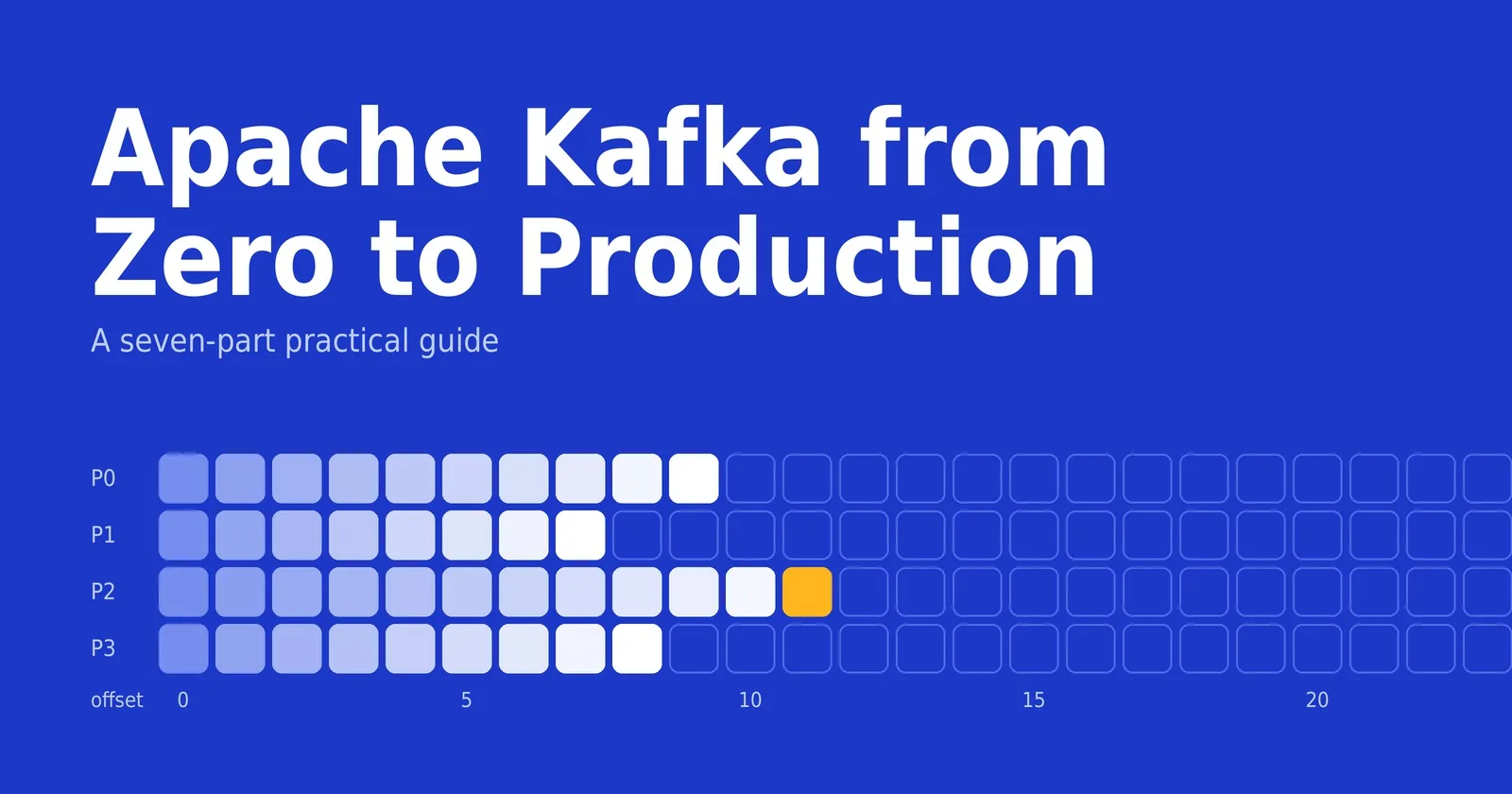
Apache Kafka is an open-source, distributed event streaming platform used to collect, store, process, and route real-time data feeds. It powers everything from payment pipelines to live dashboards, yet its vocabulary of topics, partitions, offsets, and consumer groups can be a hurdle at first.
This series walks through Kafka step by step. Each part is short enough to read in one sitting, includes hands-on examples, and builds on the one before it.
Who it's for
Developers, data engineers, and architects who are new to Kafka or want a clearer mental model of how it works. No prior streaming experience is needed.
What you'll learn
Apache Kafka Explained: what Kafka is, its core concepts, and when to use it
Producers: keys and partitioning, batching, compression, acks, and idempotent writes
Consumers and consumer groups: offsets, commits, rebalancing, and monitoring lag
Inside the cluster: brokers, replication, in-sync replicas, leader election, and KRaft
Delivery guarantees: at-most-once, at-least-once, and exactly-once with transactions
Connect and Streams: moving data in and out of Kafka and processing it in flight
Kafka in production: partition sizing, retention, security, monitoring, and managed options
How to read it
Start with Part 1 and work through in order, or jump to the topic you need. Every part ends with a short pointer to what comes next.
 Samod Alex