
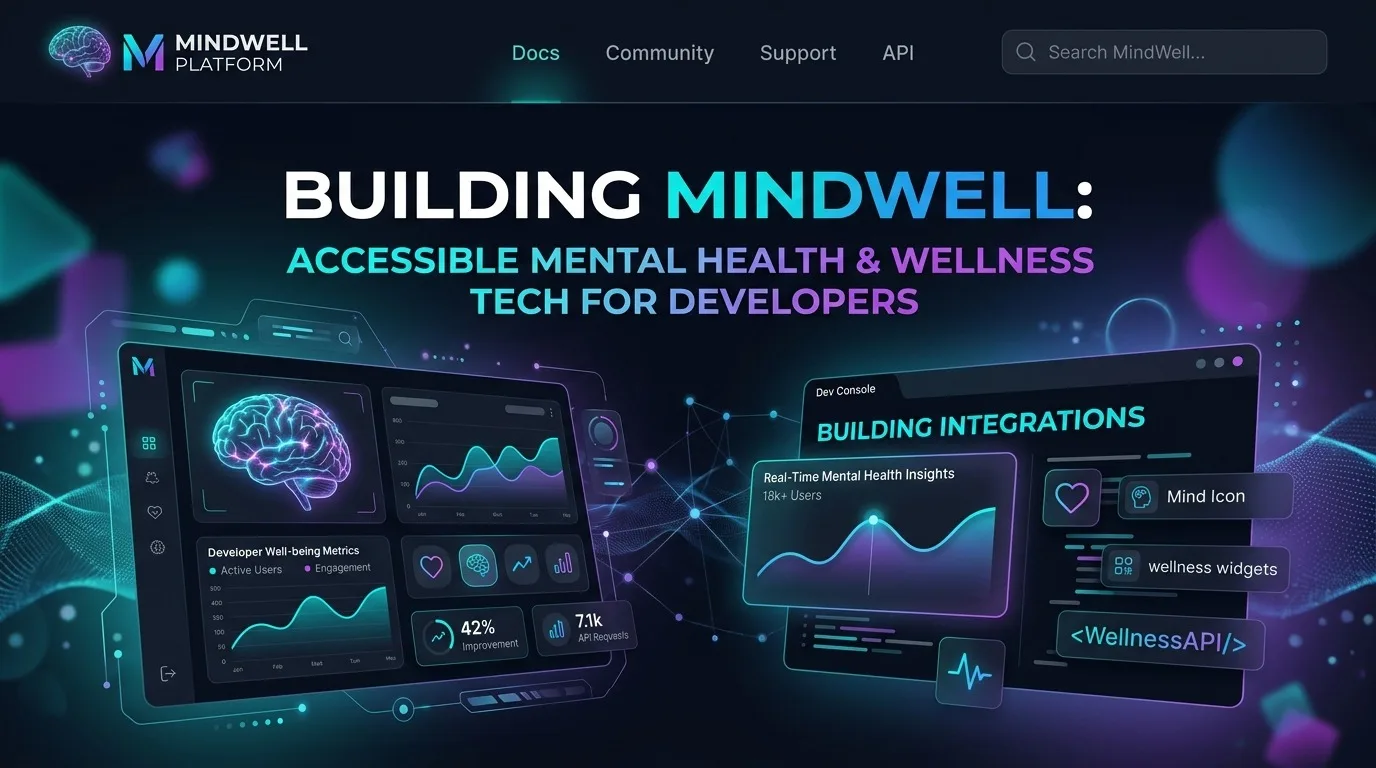
Introduction: The Hidden Challenge in Software Engineering
As software engineers, creators, and builders, we spend countless hours solving complex algorithmic problems, optimizing system architectures, and maintaining high-performance codebases. Yet, one critical system often goes under-monitored: our own mental well-being.
Burnout, imposter syndrome, and digital fatigue are pervasive challenges in the developer community. When I set out to build MindWell, the objective was clear: create a dedicated, accessible, and privacy-focused mental health platform tailored specifically for the modern developer's workflow.
What is MindWell?
MindWell is a digital health and wellness ecosystem designed to empower individuals with accessible mental health support, structured mindfulness tracking, and real-time wellness tools.
Key pillars of the MindWell platform include:
Web Accessibility First: Engineered from the ground up following WCAG guidelines to ensure seamless screen reader compatibility, keyboard navigation, and high-contrast color palettes.
Privacy & User Sovereignty: Data privacy is paramount when dealing with health insights. MindWell prioritizes client-side security and minimal data retention.
Developer-Friendly Tools: Intuitive progress dashboards, interactive reflection logs, and gentle micro-break reminders.
The Tech Stack Behind MindWell
Building a responsive, fast, and accessible health platform required selecting a modern tech stack focused on performance and reliability:
Frontend Architecture: Next.js & React for dynamic server-side rendering and quick initial load times.
Design & Styling: Custom CSS with CSS variables, dark-mode toggle, glass morphism UI accents, and dynamic color systems tailored for low eye strain.
Accessibility Integration: ARIA landmarks, semantic HTML5 elements, keyboard focus rings, and automated dynamic font scaling.
Why Accessibility & Mental Health Belong Together
Accessibility is not a feature toggled on at the end of a sprint, it is a fundamental right.
In mental health tech, poor contrast ratios, convoluted UX patterns, or sluggish page loads can cause immediate cognitive friction for users experiencing stress or fatigue. By prioritizing high-contrast design, clean visual hierarchy, and fast responsiveness, MindWell ensures that getting help or tracking wellness is completely frictionless.
Explore MindWell & Join the Journey
MindWell is live, open to feedback, and continuously evolving!
Live Platform: MindWell Application
GitHub Repository: rudra496/mindwell
Portfolio & Writing: Rudra Sarker Portfolio
Whether you are a developer looking for better wellness tools or an engineer interested in building accessible web software, I would love to connect and hear your feedback.
Crafted with care for developers everywhere.





Comments(0)
Join the discussion by logging into your account.
No comments yet. Be the first to comment!