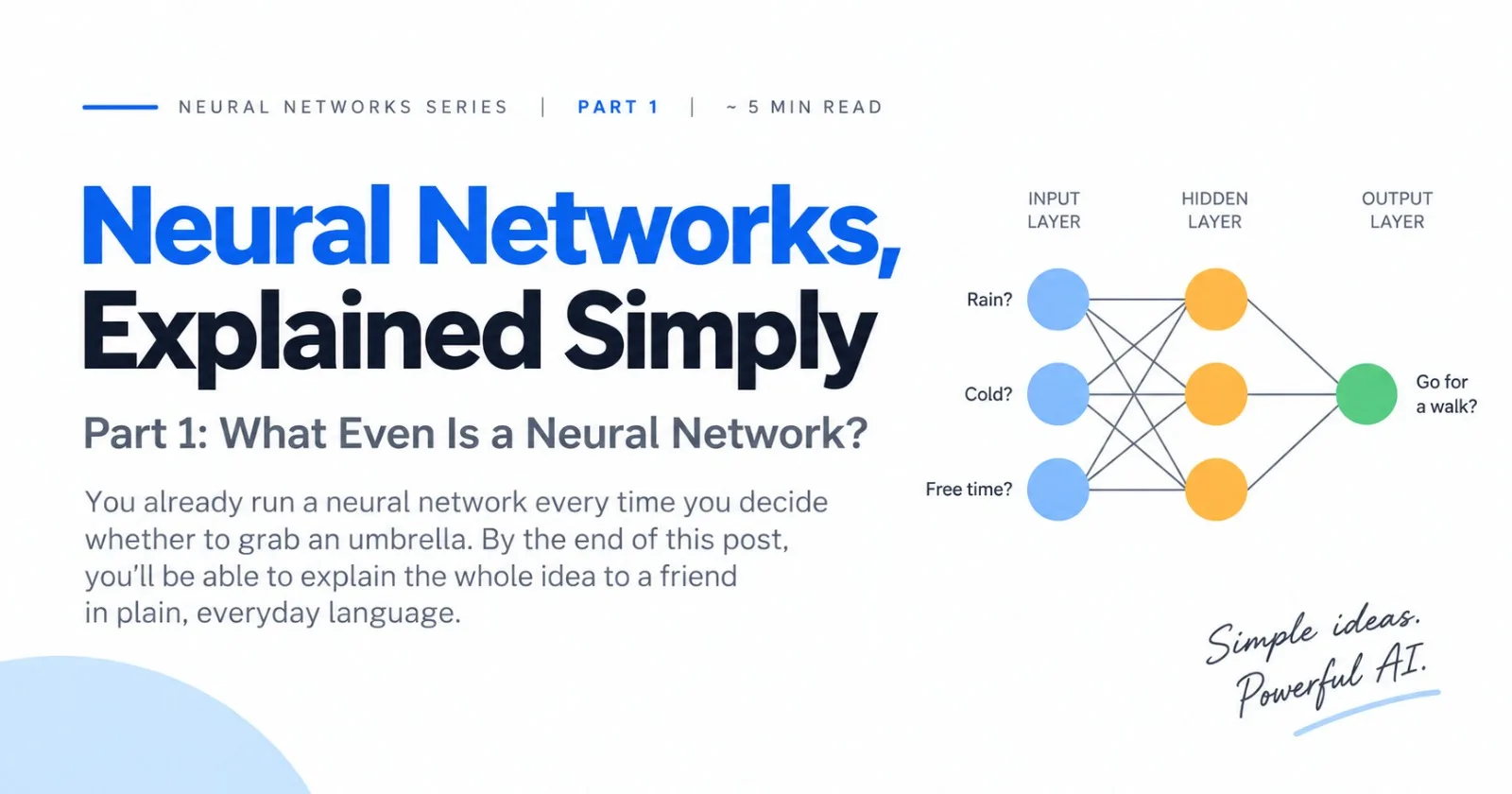
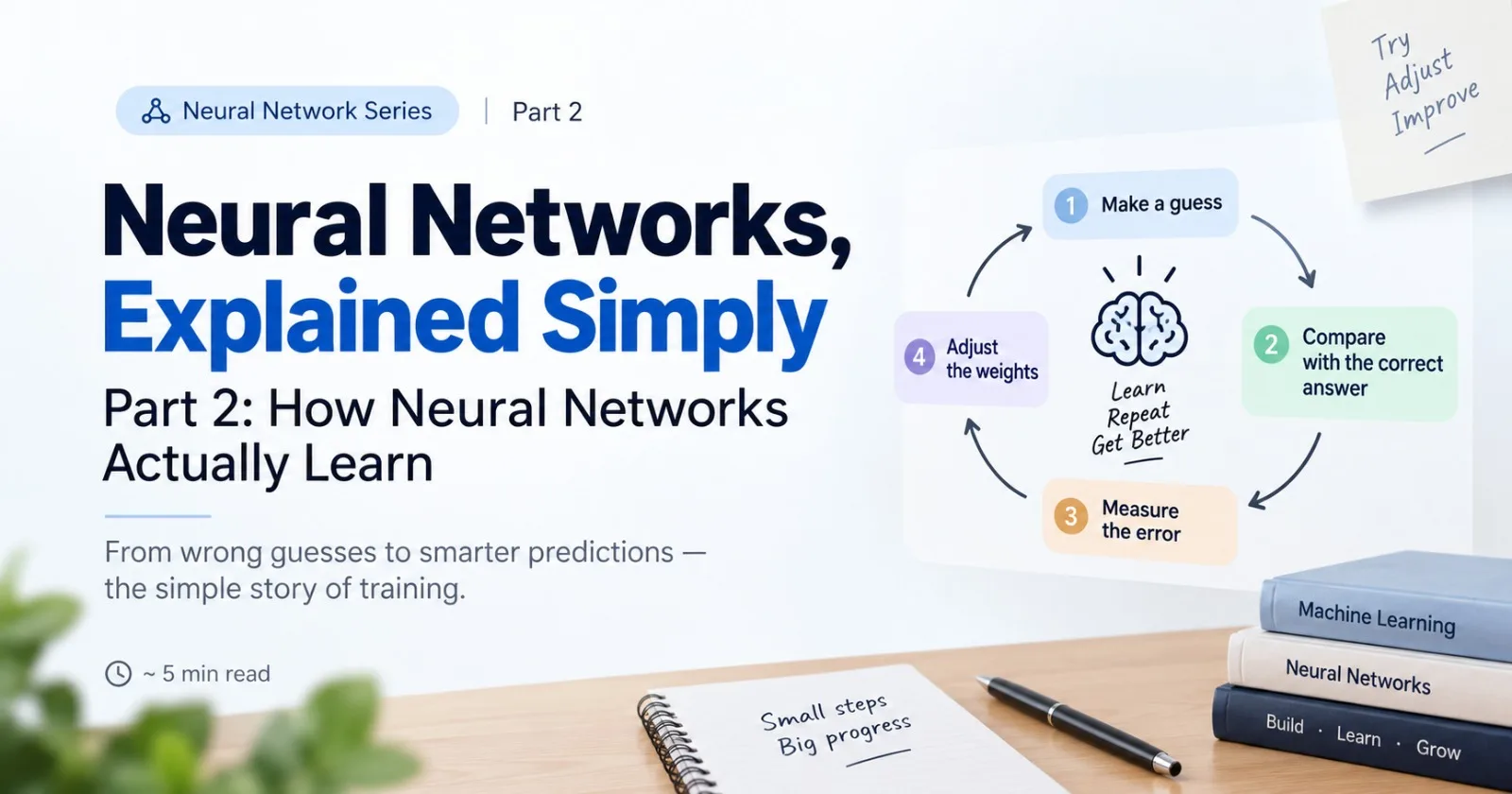
"Neural Networks, Explained Simply" is a weekly series built for one purpose: turning neural networks from an intimidating black box into something you can actually explain to a friend.
Every post starts from an everyday decision, not a textbook definition. We introduce the idea of a "neuron" through the ordinary act of deciding whether to go for a walk, then build up piece by piece to the mechanics that power modern AI — how networks learn from mistakes, why they need activation functions, how they recognize images and language, and how a trained model eventually gets deployed and used in the real world.
No calculus is assumed. No prior machine learning background is required. Every concept gets a plain-language explanation, a diagram to make it visual, and a hands-on exercise so it actually sticks — because in this series, "simple" doesn't mean "shallow." We don't skip the steps that make things click; we just explain them without the jargon.
This series is for total beginners curious about how AI works, students building a foundation, and engineers who've used tools like ChatGPT and want to understand what's actually happening underneath. By the later posts, you'll be working with the same core building blocks — training, optimization, attention — that power today's most advanced models.
New post every week. Start with Part 1 and build your first neuron from scratch.

 Sanju Singh