CAP Theorem and PACELC: What Distributed Systems Actually Trade Away
CAP theorem says a distributed system has to choose between consistency and availability when the network partitions. PACELC adds the part C...

Nov 16, 2026
8 min
CAP theorem says a distributed system has to choose between consistency and availability when the network partitions. PACELC adds the part C...
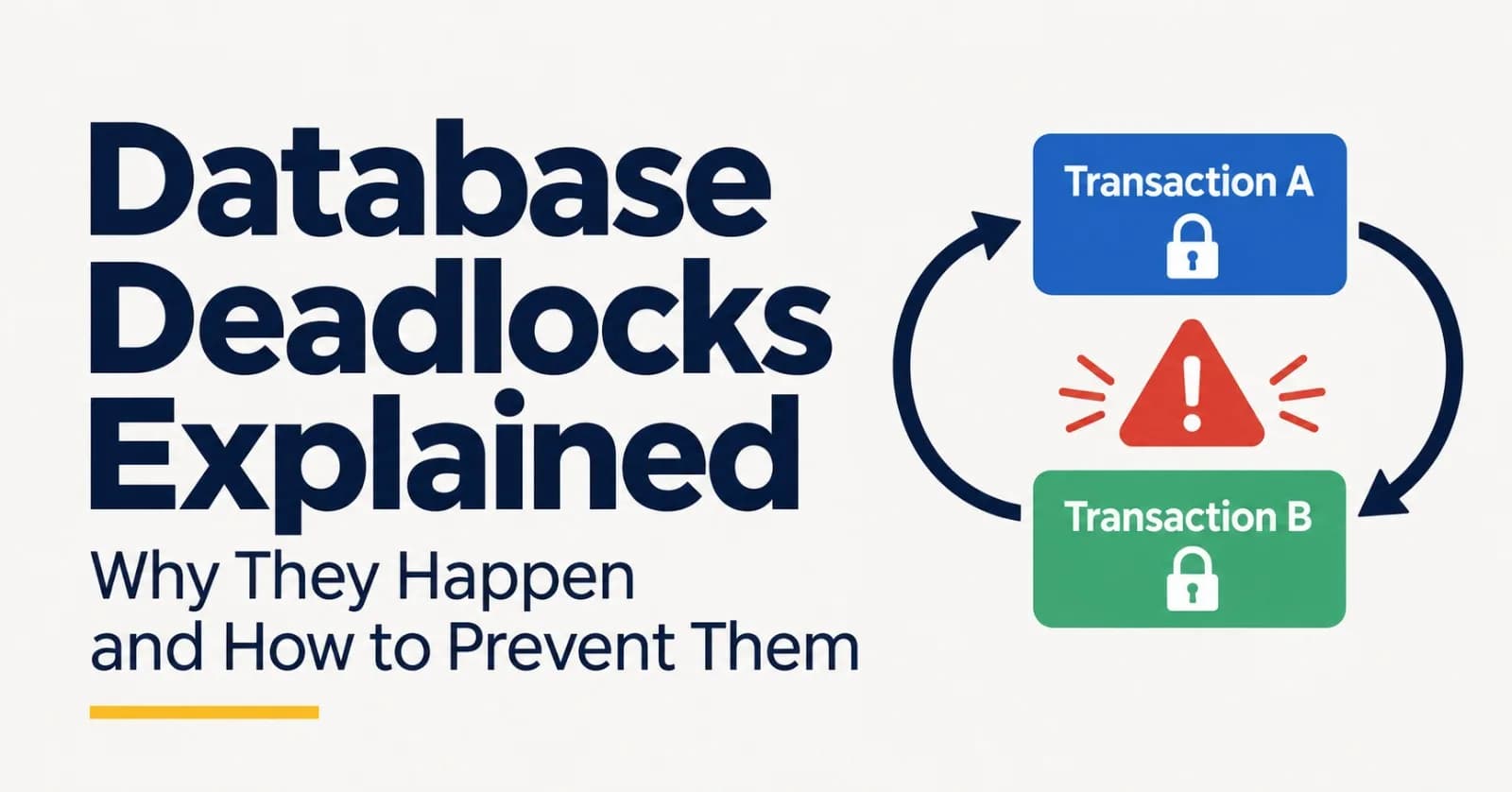
Database deadlocks occur when transactions hold locks that each other needs. Learn how PostgreSQL, MySQL and SQLite detect and break them, r...

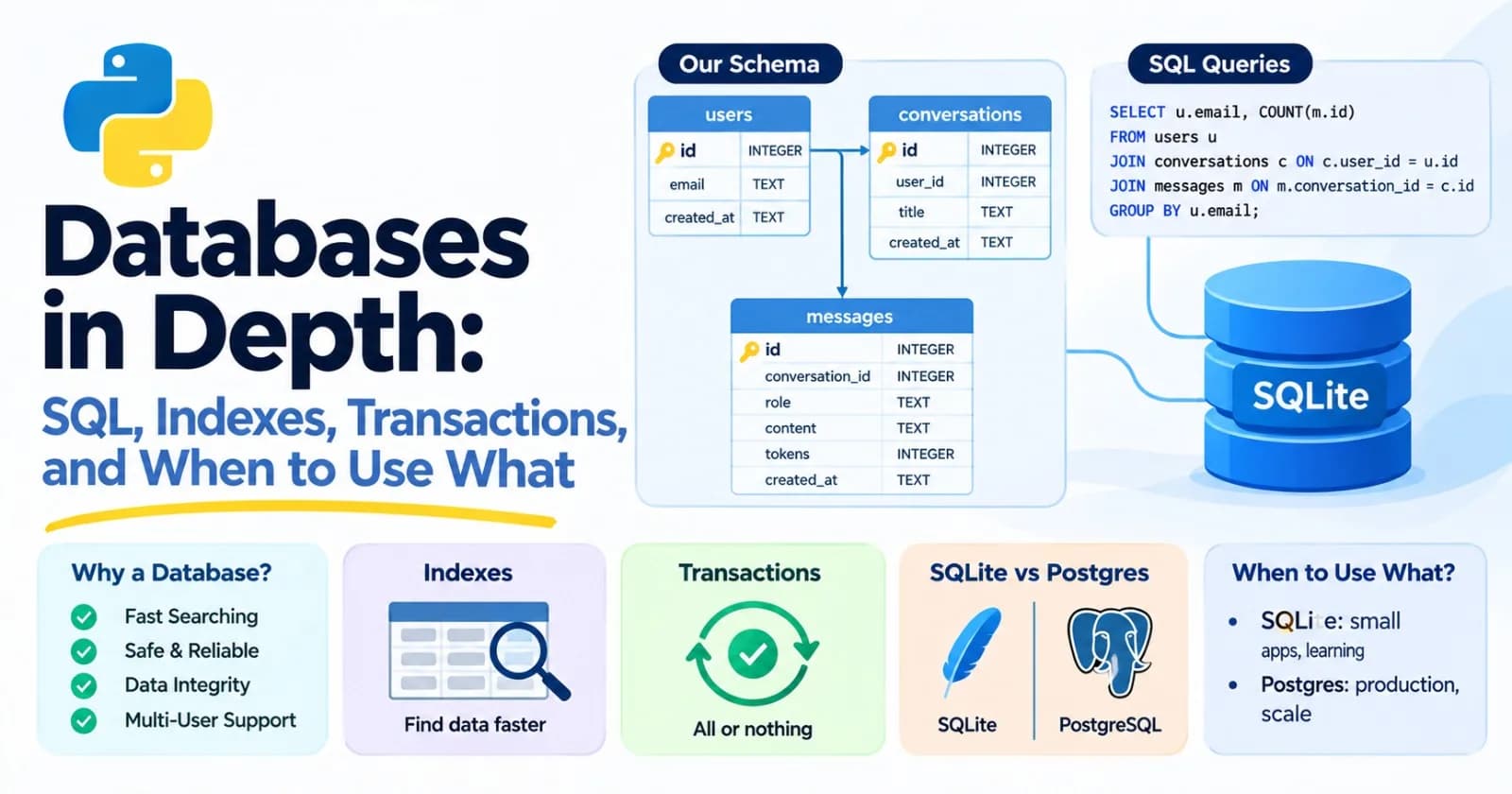
A real AI app has to remember users, conversations, and token costs. This post teaches SQL, joins, indexes, transactions, and SQL injection ...

A slow Postgres query is a guess until you see its plan. This guide shows how to read EXPLAIN ANALYZE output, what the numbers mean, and a r...

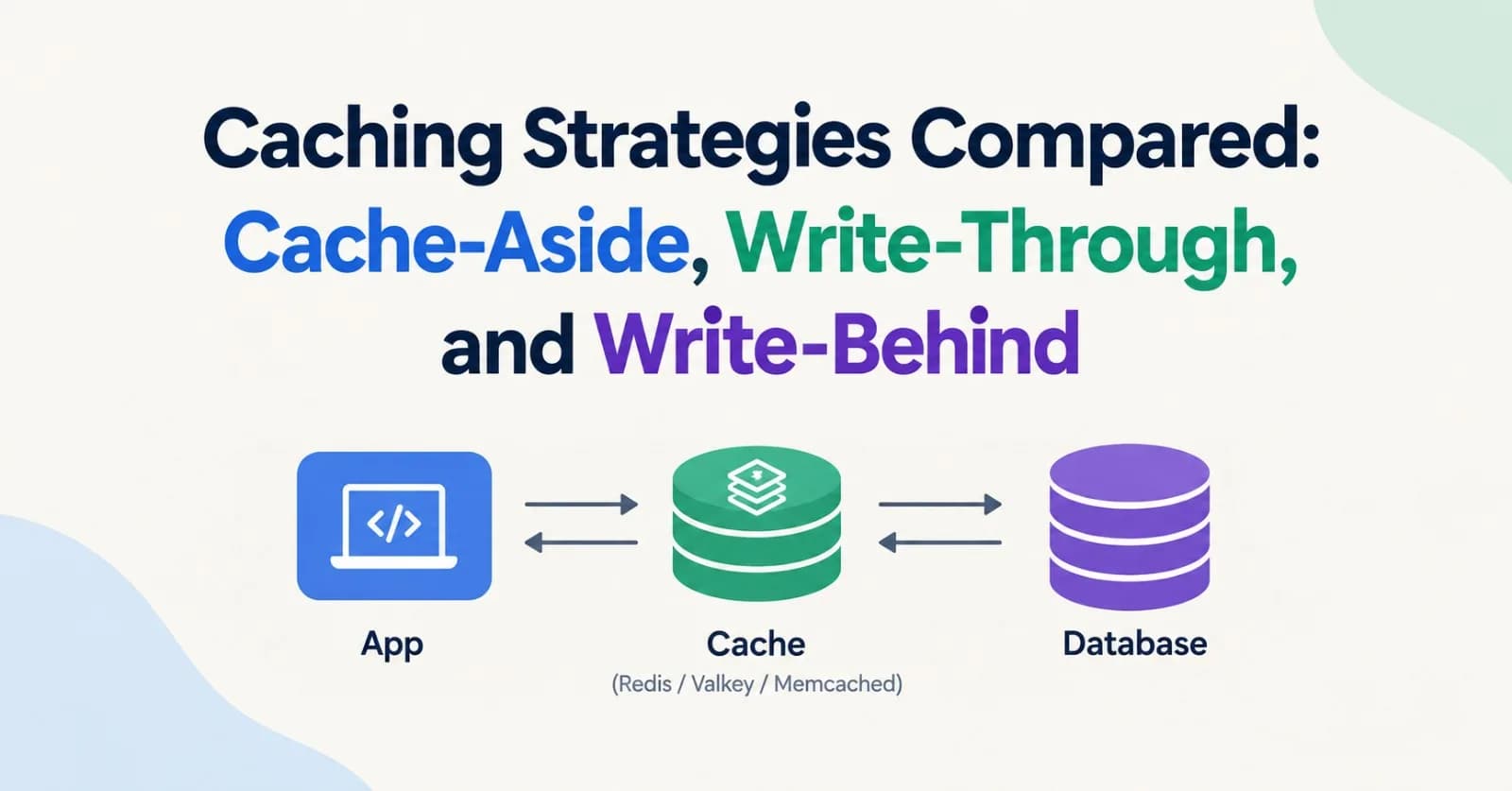
Caching is easy to add and easy to get wrong. This post walks through cache-aside, write-through, and write-behind: how each works, what it ...
Redis is more than an in-memory cache. Explore its event loop, data structures, memory management, persistence, replication, and clustering—...

Most small projects don’t need a database server. Learn what SQLite can handle, how to configure WAL and safe transactions, manage backups a...

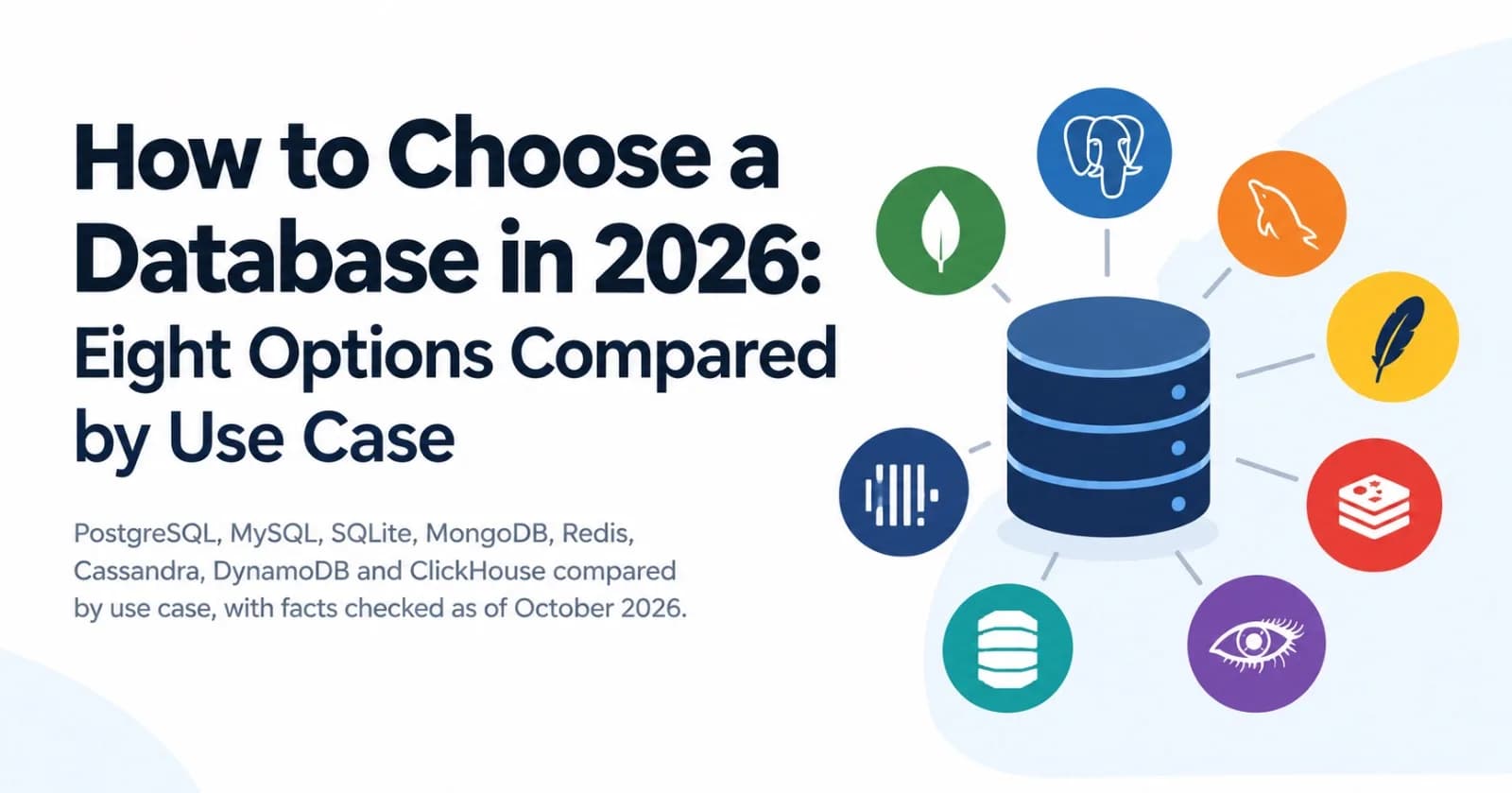
No database is best at everything. This guide compares eight popular ones by use case, license, current versions and trade-offs, so you can ...