
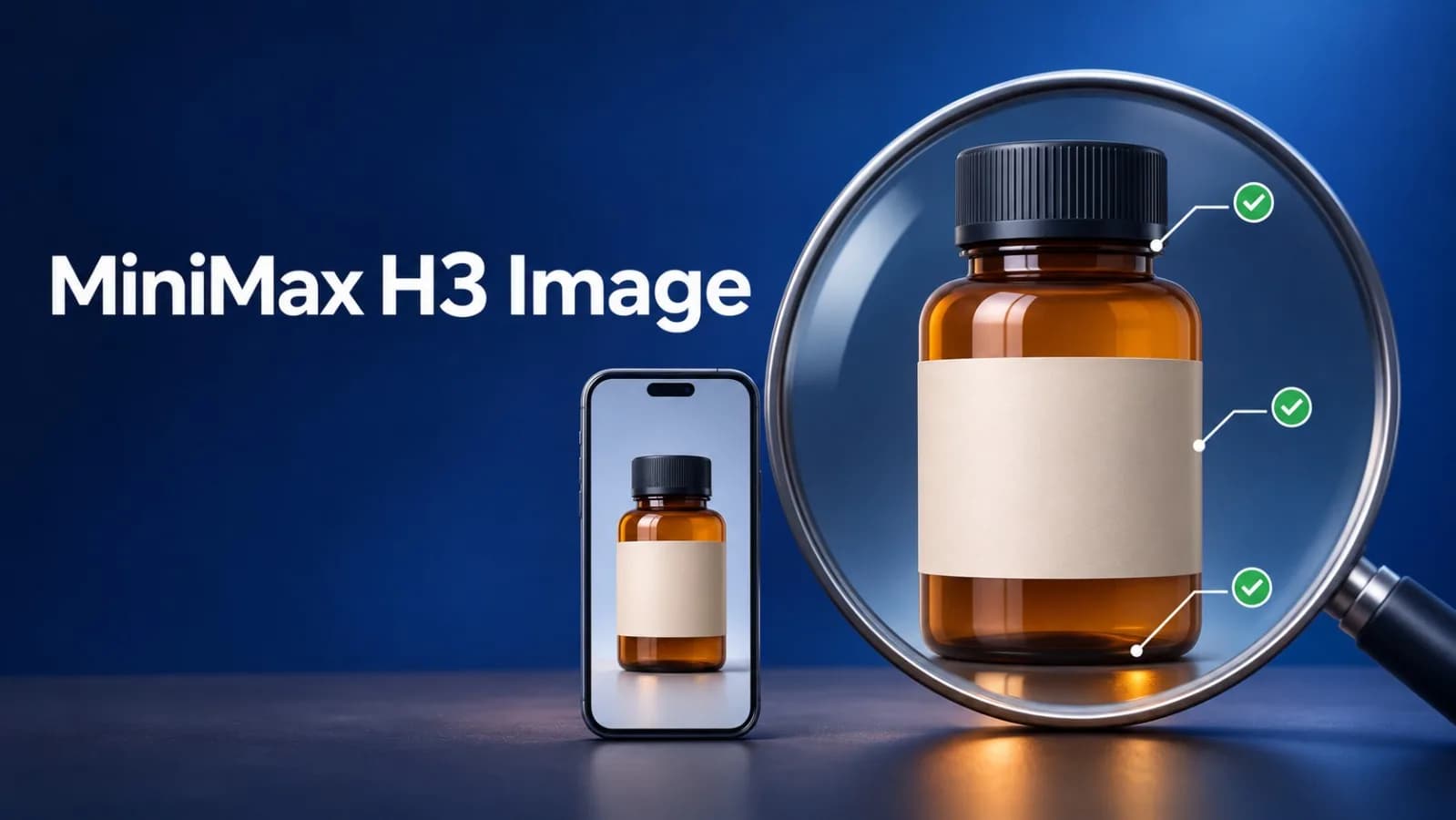
You are ready to publish a product image. It looks clean in the editor and even better in a phone preview. Then you open it at full size. One letter on the label has changed, the cap leans slightly to one side, and the reflection shows an object that is not on the table.
The image is sharp. The preview was simply too small to reveal the mistakes.
With MiniMax H3 Image, you can start from a written brief or revise an existing image with references, then examine the result in high resolution. For a product page, poster, presentation, or social post, looking good is only the first test. The image also has to hold up at the size where people will see it.
Review at Three Sizes
Do not approve the image only inside the generation window. Look at it in three ways:
Full size: Inspect labels, edges, small parts, shadows, glass, and reflections.
Final crop: Place the image in the planned banner, product card, or post. Check that no important feature is cut off and that any headline has enough room.
Thumbnail size: Step back. The main subject should still be clear without relying on tiny details.
These views answer different questions. Full size reveals errors. The final crop shows whether the image fits its job. The thumbnail shows whether the idea reads quickly.
Check the Subject, the Facts, and the Scene
At full size, make three short passes instead of scanning everything at once.
Start with the subject. Follow its outline and inspect lids, handles, straps, buttons, fingers, and other small parts. Watch for uneven edges or pieces that blend into the background.
Check factual details next. Compare names, labels, logos, numbers, colors, packaging, and visible features with an approved source. A polished image is still unsuitable if it shows the wrong size, material, attachment, or price.
Finish with the scene. Look for repeated objects, broken wall lines, misplaced shadows, or reflections that show something absent from the frame.
Ask one practical question: “Would anything look wrong if this appeared beside a real photo of the product?”
Fix One Visible Problem at a Time
If most of the image works, avoid rewriting the entire brief. Use the editing workflow for the specific problem and state what must remain unchanged. Upload only reference images you have permission to use.
For example:
Correct the bottle cap so its edge is smooth and symmetrical. Keep the bottle shape, camera angle, background, lighting, label position, and crop unchanged.
Compare the new version with the previous one at the same zoom level. Check the corrected area first, then scan the label, subject shape, and background again. A better cap is not useful if another approved detail quietly changes.
Keep Exact Copy Outside the Image
Not every correction needs another generation. If a headline, price, safety note, or legal line must be exact, add the approved copy in a design tool after the image is ready.
The same rule applies to product claims. Do not let the visual add a feature, result, or endorsement that cannot be verified. If an identifiable person appears, use their likeness only with permission. Do not present a generated scene as a real event or customer result, and disclose its synthetic nature when viewers could otherwise be misled.
Open one MiniMax H3 Image result at full size. If the label, edges, product features, and reflections survive the close look, place it in the final layout and check it once more. The image is ready when it is accurate—not merely sharp.
Comments(0)
Join the discussion by logging into your account.
No comments yet. Be the first to comment!