Native Technical Authoring
Write with live Mermaid diagrams, KaTeX formulas, syntax highlighting for 30+ languages, and embeds from supported code playgrounds.
Draft, refine, and schedule.
Write with live Mermaid diagrams, KaTeX formulas, syntax highlighting for 30+ languages, and embeds from supported code playgrounds.
Fix grammar, rewrite or expand passages, build outlines, suggest titles, and generate summaries, FAQs, and SEO metadata with your own Groq API key.
Queue articles for future automated release or generate secret, revocable draft preview tokens for peer reviews before publishing.
Your own domain, plus other platforms.
Connect a root domain, www, or custom subdomain with managed TLS. Founding Pro adds publication layouts, built-in search, static pages, custom navigation, redirects, and AdSense.
Send full articles to connected Dev.to, Hashnode, Medium, and WordPress accounts immediately or after a configured syndication delay.
Import from Dev.to, Medium, Hashnode, or RSS—or upload a Markdown ZIP, including a Hashnode GitHub backup, as editable drafts.
Understand readers and keep them coming back.
Measure ZyVOP views, engaged reading depth, referral sources, detected AI-referral signals, and supported metrics from connected DEV and Hashnode accounts.
Create ordered series, follow authors, and join threaded discussions with notifications and accepted answers. Reading streaks, badges, and public leaderboards recognize participation.
Founding Pro reminds you to review published articles 90 and 180 days after their last update.
Connect publishing to your tools.
Publish or update Markdown through the REST API, npx zyvop publish, GitHub Actions, or supported MCP clients such as Claude Code and Cursor.
After connecting a repository, back up published articles and later edits as Markdown with frontmatter, or run a manual bulk backup for existing posts.
Founding Pro sends signed events when posts are published, updated, or deleted. Connect Slack, Zapier, or your own HTTPS endpoint.
Help search engines and AI find your articles.
The XML sitemap lists indexable content; RSS provides recent posts. Canonical articles expose per-article JSON, and eligible posts appear in /llms.txt catalogs.
ZyVOP adds structured data to every article, and FAQ markup only when readers can see the FAQ on the page.
Set a canonical URL for each post. ZyVOP notifies IndexNow for eligible URL changes and passes configured canonical fields to supported destinations; search engines choose which URL to index.
Review drafts with a 0–100 editorial heuristic that does not predict rankings or citations. Pro also reports visits with detectable AI referrers and provides per-bot crawler preferences for custom domains.
Use the real editor on a sample draft. AI tools show local sample responses; Save and Publish never affect your account.
Loading studio...
Walled gardens rent your audience back to you. ZyVOP empowers technical creators to build a permanent, portable subscriber relationship.
Turn casual readers into loyal subscribers. Every published post can be delivered directly to your readers’ inboxes with double-opt-in verification.
You own your audience, not ZyVOP. Export your full subscriber list as a standard CSV anytime with one click. Never get locked in.
Readers visit your publication to read your code and ideas. We never show paywall blockers, full-screen popups, or "1 article remaining" warnings.
Start writing in Markdown, import existing articles, or map your custom domain today.
Use the ZyVOP CLI, a GitHub Actions workflow, or a supported MCP client to create, update, and schedule posts.
Keep core developer publishing free, syndicate to connected destinations, and enable GitHub backup when you want repository copies.
Start with the free publishing tools. Upgrade to Founding Pro for a custom domain and independent publication controls.
Write in Git, automate via CLI and GitHub Actions, and syndicate across developer networks while retaining your canonical URLs.
Run an independent publication under your custom domain, monetize with your own Google AdSense, and build your brand.
Real developers using ZyVOP to syndicate across platforms, protect canonical SEO, and own their publications.

“ZyVOP changed how I publish. I write once and it syndicates everywhere, keeping my canonical URLs clean so my SEO stays intact. I keep full ownership of my content, and my readers hit zero paywalls.”

“Writing and publishing on ZyVOP is a great experience. I love that I no longer have to copy-paste articles across multiple platforms. I write once and ZyVOP handles distribution with full author attribution.”

“I moved my technical articles here and created my Engineering in Practice series. What I appreciate most is that the team actively listens to contributors and ships developer improvements immediately.”

Nvidia’s board may be preparing to remove CEO Jensen Huang, the Wall Street Journal reports, after two reported affairs, one with a suspected Chinese spy. Here’s a plain-English look at the timeline, the stock drop, the missing successor, and what to watch next.

Apple’s Claris unit is testing Harbor, a Mac app that turns one or more Macs into a private AI server. It can download open-weight models and link Macs over Thunderbolt 5 to pool memory, with no command line. Here’s what’s known, what isn’t, and the caveats.
Backup jobs fail quietly: stale jobs, dropped folders, corrupt archives. This post builds a dependency-free Python restore test that samples your live files, restores them from the latest backup, compares checksums, and alerts on any problem. We prove it by breaking a backup on purpose.
The web is the largest data source in the world, but most of that data is locked inside HTML pages designed for humans, not programs.

Most LLM apps don’t fail because the model is too weak. They fail on rate limits, broken JSON, runaway costs, silent regressions, missing logs and prompt injection. Here are six failure modes, with fixes and small experiments you can run yourself.
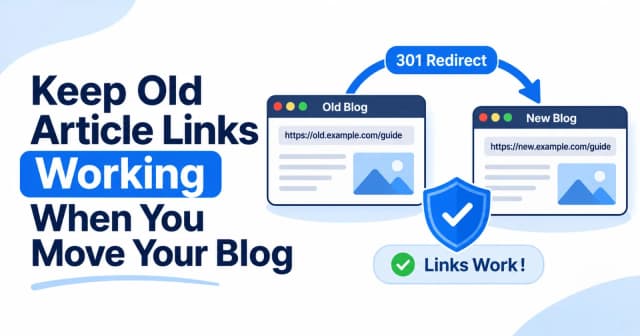
A practical migration checklist for mapping old article URLs to new ones, setting redirects on the correct domain, and testing links after launch.
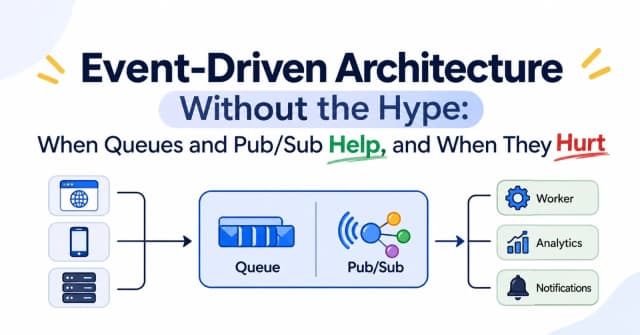
Events can take slow, optional work off your critical path, but they also bring duplicates, reordering and flows nobody wrote down. Learn when queues and pub/sub help, when a plain function call wins, and the patterns (idempotency, outbox, dead-letter queues) that make events safe.
Laravel 13 adds whereVectorSimilarTo, vector columns, and an AsVector cast, so meaning-based search can live in the Postgres or MariaDB database you run.

Anyone who finds your webhook URL can post to it. Here's how to verify HMAC signatures, stop replayed requests, and handle duplicate and retried deliveries, with code checked against GitHub's and Standard Webhooks' published test vectors.
Python gives the orders, but C++ and Rust do the heavy lifting under AI libraries. This post teaches the reading cues, shows real benchmarks (including a fast but wrong result), and builds a C++ search function called from Python and checked against NumPy.

You cannot even compare different models because they reason differently. Some providers charge for the cache storage, some provide different caching...

AI coding agents read files, run commands, and install packages for you, and anything they read can carry hidden instructions. Here’s a simple, layered way to secure them: sandboxing, least-privilege permissions, and human approval gates that people don’t learn to ignore.

Learn how to compare Wan 3.0 video generations, track prompt changes, and review clips for different placements before publishing.

Fingers and garbled signs no longer expose AI images. This guide covers the clues that still help, source checks, provenance tools like SynthID and Content Credentials, a short Python checker you can run, and why detectors alone can’t settle the question.
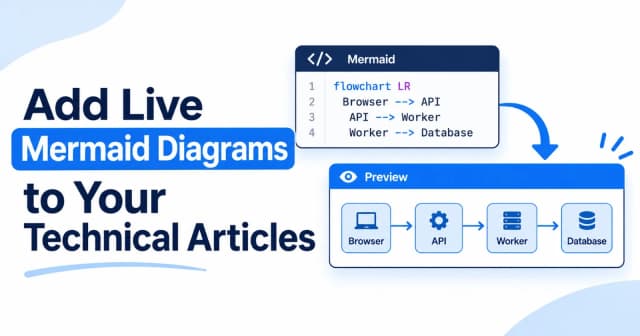
Use Mermaid code fences to explain workflows and architecture in your technical articles, then preview the rendered diagram as you write in ZyVOP.